
Size matters
How to Choose the Right Print Size for Fine Art Photography
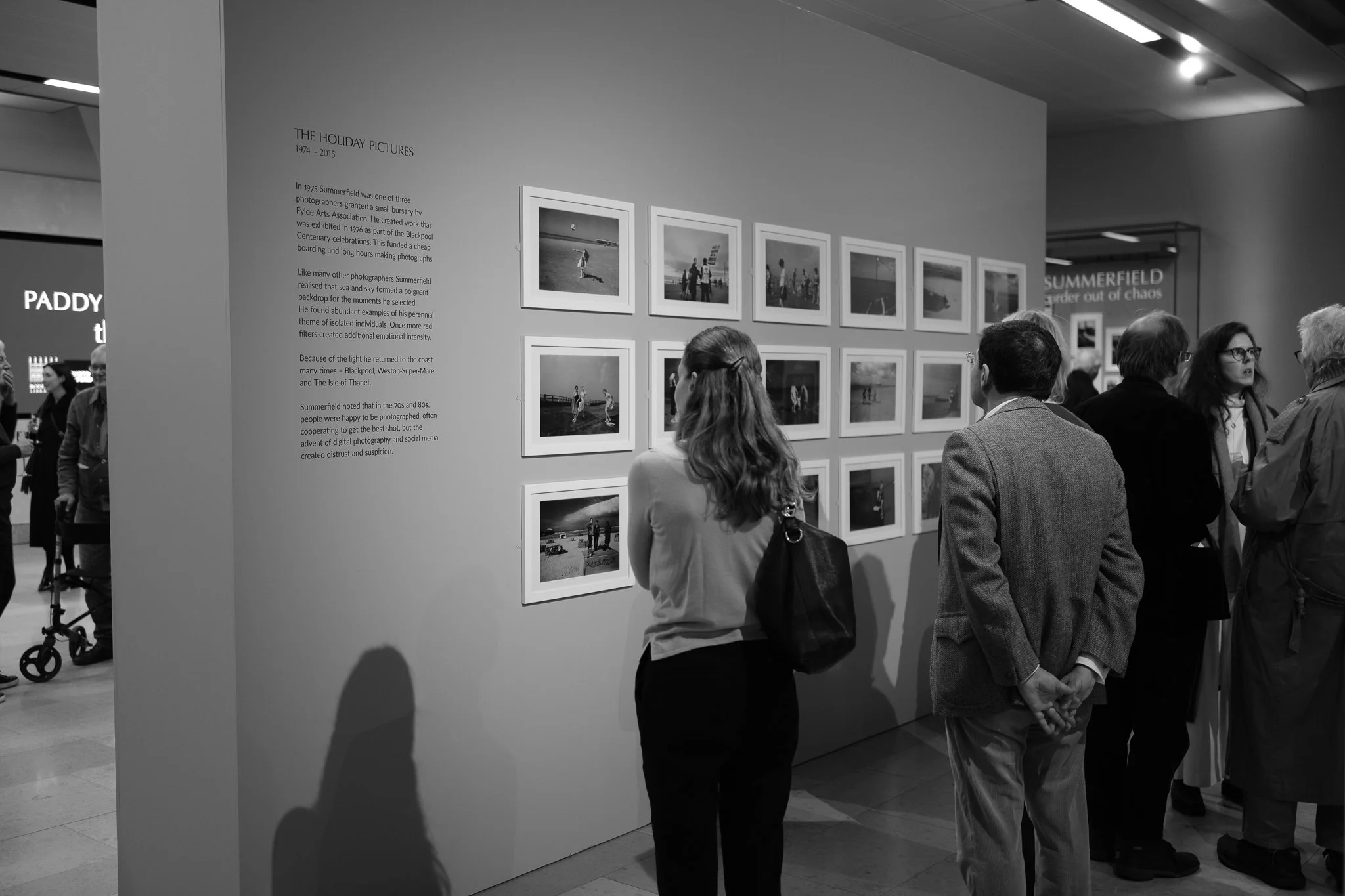
Paddy Summerfield, The Camera Helps, Photo Oxford 2025. Photo: Aniella Weinberger Photography
Choosing how large to print your fine art photographs is one of the most strategic decisions you’ll make. It affects how viewers engage with your work and their emotional impact, but also the gallery’s spatial flow. Bigger isn’t always better, however, and the larger you go, the more technical and logistical hurdles you’ll need to address. Read on for our full guide to choosing the right size for your fine art prints.
ARTISTIC CONSIDERATIONS
Artistic Intent
Size changes the meaning of your work, so you need to think carefully about how you want viewers to feel when they approach your work. Small prints that the viewer needs to see up close suggest intimacy and feel contemplative and precious in a way a larger print may not. Large prints are more immersive and can feel cinematic or even confrontational.
Subject Matter
Some subjects work better at scale. Landscapes, architectural work, and conceptual pieces often benefit from large formats, while portraits, documentary work, or delicate still lifes can be powerful at smaller sizes. A small print on a large wall may feel lost however, so you’ll need to consider the work’s impact carefully and make all decisions deliberately. A common rule is that the ideal viewing distance is roughly 1.5× the diagonal of the print.
Gallery Space
Knowing the space you’ll be exhibiting in is key to making decisions on print sizes. Your prints need space to breathe, so factor in generous negative space around them. Consider sightlines from doorways and corridors and avoid crowding pieces together unless you’re intentionally creating a salon‑style hang. If you’re showing a series of images, consistent sizing or a deliberate size hierarchy often works best. Also talk to your gallerist about lighting, bigger prints need more lights, and dark works require special consideration. For more on hanging your work look at our hanging guide here.
Frame and Mount Choices
Frames add visual weight to your images, so you can use a wider mount to make a small print feel more substantial, or opt for thin frames for a sleek, modern effect on a larger print. Just make sure to factor this in when deciding on print sizes.
PRACTICAL CONSIDERATIONS
Image Quality
Whether you’re working on film or shooting digitally, your photographs need to hold up to their intended size.
Shooting on medium or large format film cameras, or on digital cameras with high resolution sensors, gives you the most freedom when it comes to print size. If you’re working with older digital files it may limit your options; even upscaling with care will result in a loss of quality.
A general rule of thumb is that print files will need to be 300 dpi at final print size, but larger prints are generally viewed from a greater distance, so viewers see less detail and far lower resolutions can work. The best plan is to speak to your printer and decide on these technical aspects together.
Production Costs
Simply put, larger prints cost more to produce, frame, and transport. You may well command a higher price for a sale but the upfront costs are likely to be yours, and for emerging artists it’s a significant consideration. Think about your target audience carefully and consider your editioning strategy. Larger print are often sold in small editions, while smaller prints are generally sold in larger editions.
Transport and Installation
Oversized work will require larger vehicles for transport, more handlers and stronger hanging systems. These factors will influence the feasibility of your plans and the pricing of your work, so consider don’t forget to factor them in when budgeting.
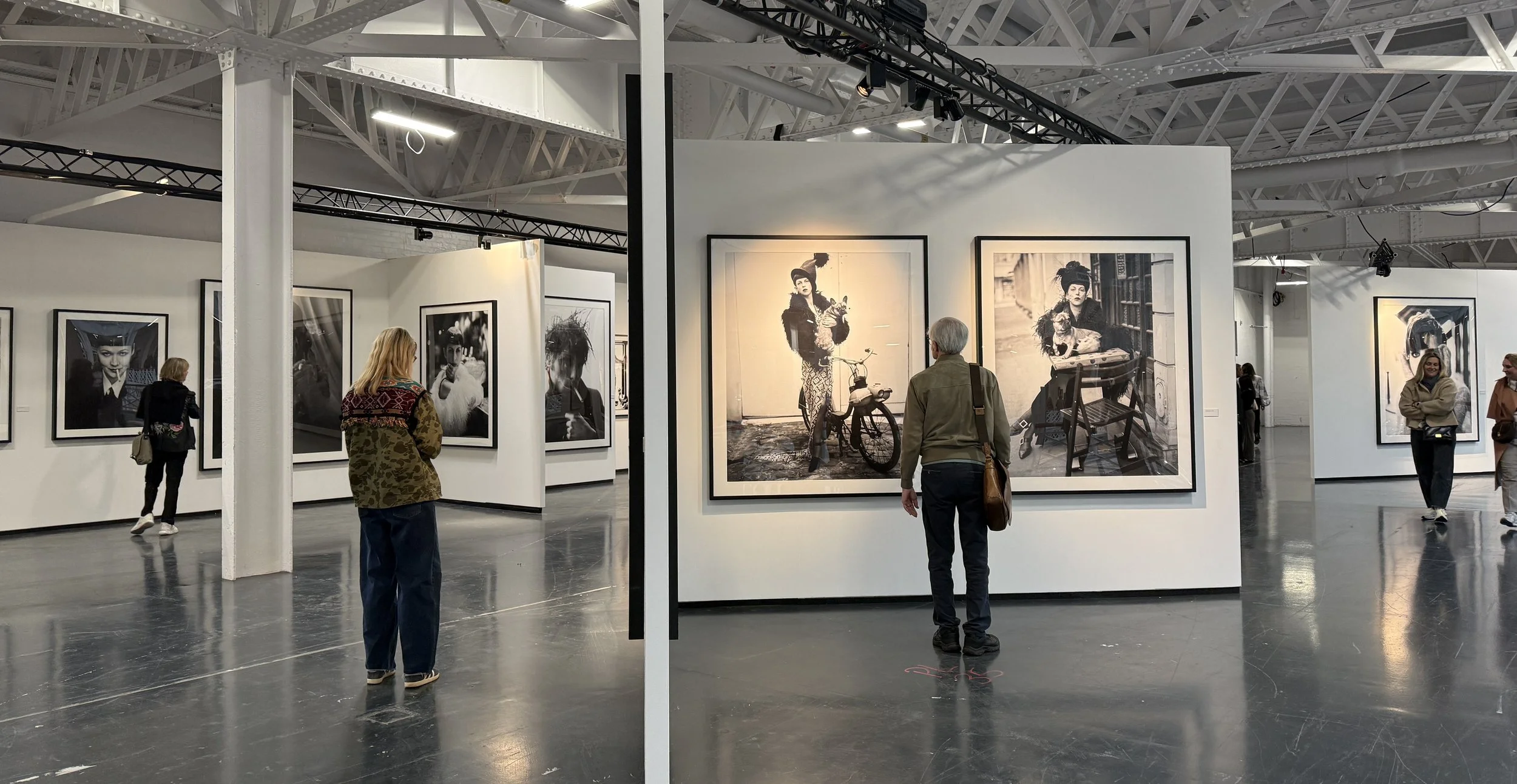
Steven Meisel’s work on show at Photo London 2026. Photo: Jane Smith Media
HOW TO DECIDE ON THE FINAL SIZE
Mock Up the Work
Use digital wall‑preview tools or print small test versions and tape them to the wall at scale.
Visit the Gallery Space
Measure walls, note ceiling height, lighting, and viewer flow.
Test Multiple Sizes
Print inexpensive proofs at different scales to see how detail holds up.
Consider the Viewer’s Journey
Think about how people will move through the space and encounter each piece.
Align Size With Your Artistic Voice
Your print size should feel like an extension of your style. Choose intentionally so that the scale of your work becomes part of the narrative, shaping how viewers emotionally and physically engage with your work. Of course you’ll need to consider all the technical and logistical aspects, but ultimately, this is a curatorial choice that must be right for your work.